POCOPOCO JOURNAL
A small project bag: four checks before you leave
Choose one project, group what belongs to it, and try taking it out once. A simple packing exercise for knitting or crochet away from home.
About a 3-minute read
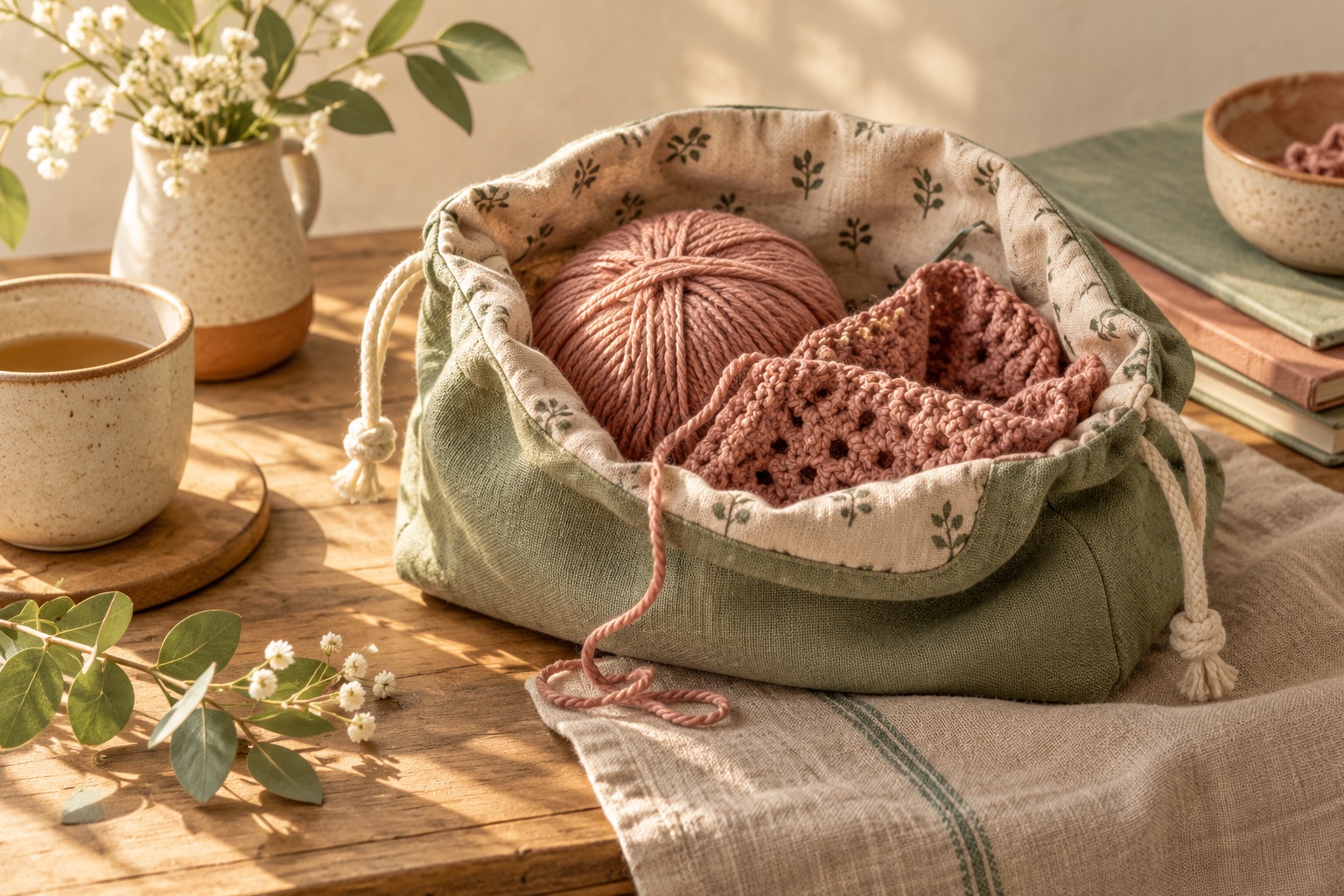
You would like to take a little knitting or crochet with you, but the bag starts filling with things you might need. Before adding another item, try deciding what you actually want to work on. This is an invitation to arrange your own project, rather than a shopping list or a rule about the best bag. Use a table and the containers you already have. The aim is to make the contents understandable when you open the bag somewhere else, without needing to bring your whole workspace.
Choose one project and one small intention
Put the project you want to take on the table. Ask yourself what you would enjoy working on: continuing a familiar section, or simply looking over the work so far. It does not have to be a promise to finish a particular number of rows. Keep other projects outside this first selection. If the work needs a large surface or several references, you might prefer to leave that part for home. Choosing a smaller intention is one way to decide what belongs in today's bag.
Make three groups before packing
Arrange the selected contents in three groups: the project and its yarn; the tools you intend to use; and the instructions or reference you will consult. Look at each group and ask which items belong to this outing and which were left there from another project. Put the latter back in their usual place. If there are small accessories you want to bring, gather them in a container you can recognise. You do not need matching pouches or a new organiser to try this exercise.
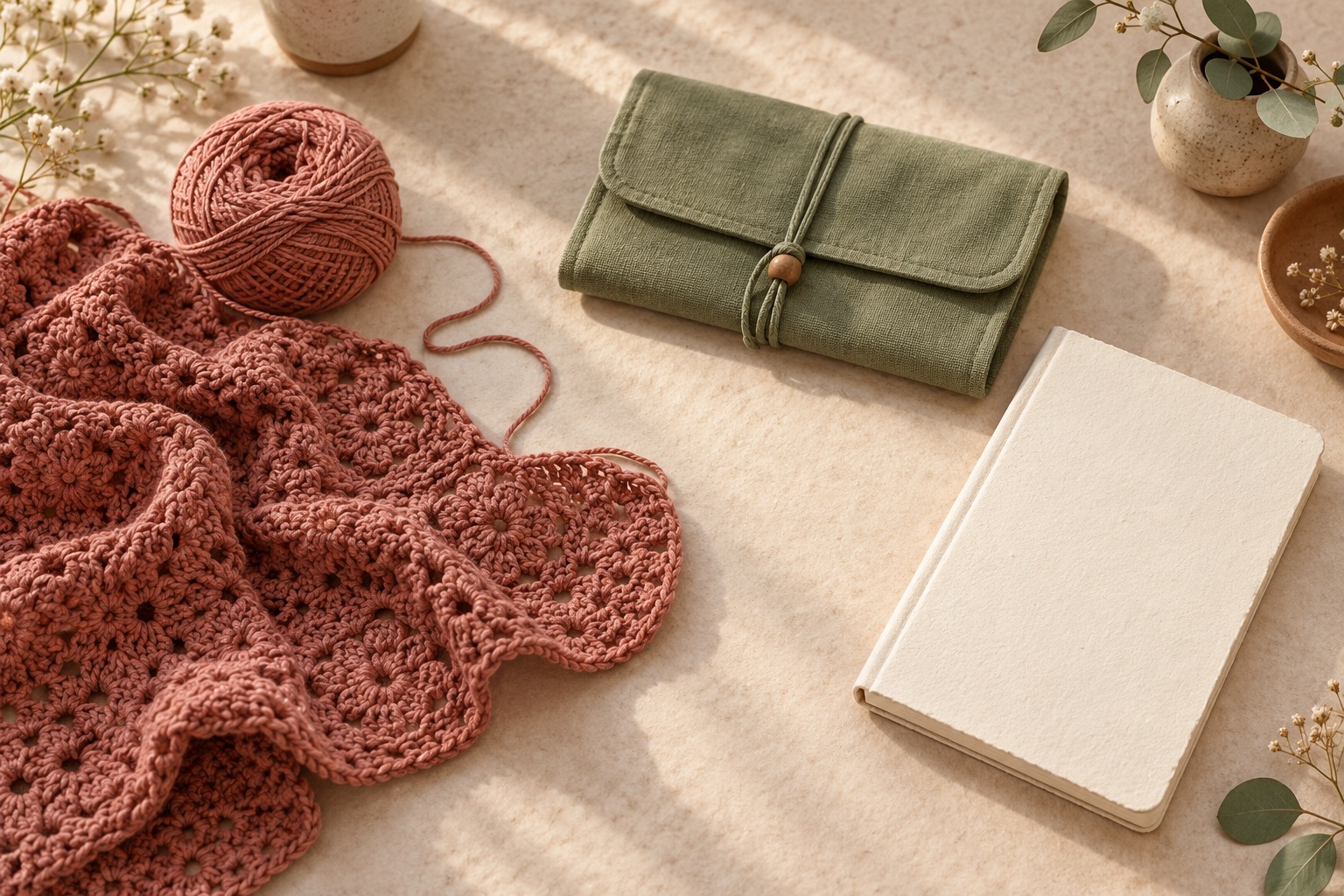
AI-generated illustration of sorting project contents. It is not a pattern, technical diagram or tested packing specification. Rehearse opening the bag once
Place the groups in your chosen bag, then set it beside a chair. Open it as if you had just arrived. Can you find the project and the reference you meant to use? Do you need to take everything out to reach a small item? Rearrange the contents according to the order that feels natural to you. Try the sequence once more, including putting things back. This is a check of your arrangement, not a test of how much the bag can hold. Leave some items at home if you prefer a simpler setup.
Give the contents a place when you return
Decide where you will put the bag at home and which shared tools should return to their usual place. When you unpack, compare what you brought with what you actually wanted to use. Something untouched is not automatically unnecessary; it is just a question to consider for the next outing. You can keep a little packing list with the project or start again on the table each time. The arrangement can change as the project changes. It does not need to become a permanent system.